

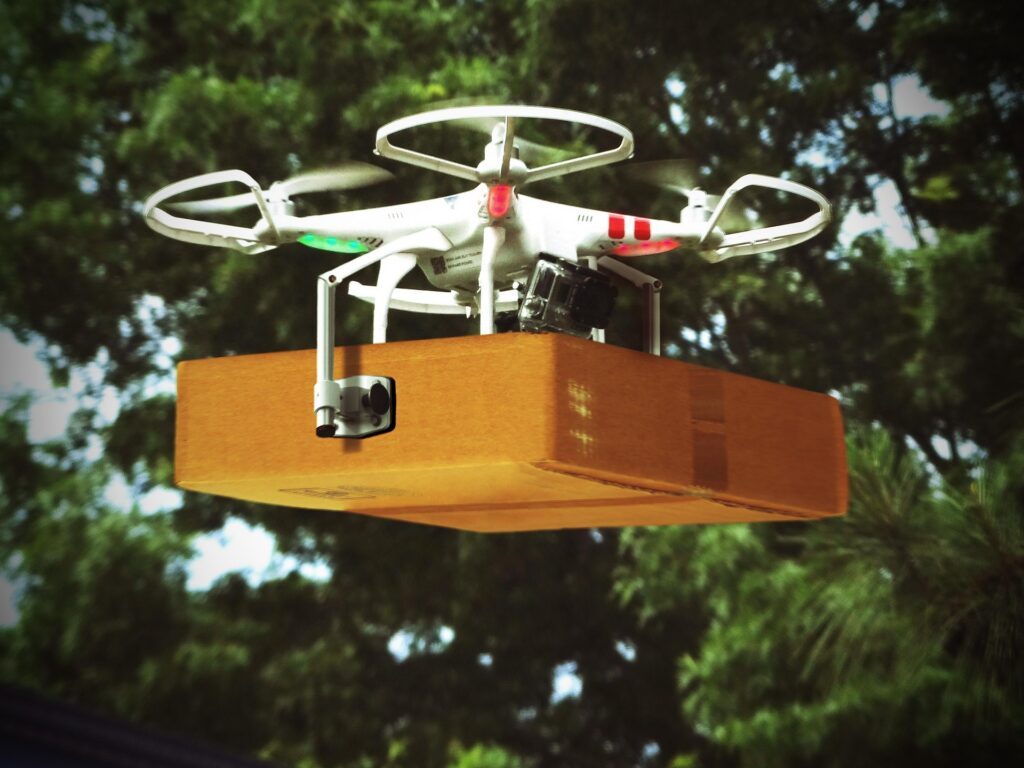
The newspaper where I work published an article this week announcing the start of Amazon Prime deliveries by drone in Memphis, Tennessee.
“Amazon unveiled the MK30 drone, which can carry packages up to 5 pounds at speeds of up to 70 miles per hour … The drones fly at up to 250 feet off the ground and are subject to Federal Aviation Administration regulations,” the Daily Memphian article stated.
Unlike a traditional quadcopter, the MK30 has eight legs. They’re bigger and heavier than most hobbyist drones, and can fly in light rain and up to 25 miles-per-hour winds.
My suspense-story wheels started turning. What if the drone witnessed a crime while delivering a package?
Law enforcement agencies use drones for surveillance. But what if an Unmanned Aerial System delivering packages to a suburban home or apartment complex happened to capture an image of a murder in progress?
That’s where my head was at when I searched terms such as “delivery drones witnessing crimes.” I expected to read about drone operators assisting law enforcement with footage the same way those front-porch cameras capture all kinds of activity. People forget those cameras are watching 24/7.
My online search uncovered some articles about delivery drones and crime, but it wasn’t what I expected.
Drones aren’t capturing criminals as much as they are being misused by criminals for their own purposes.
I learned that drones are a challenge for correctional facilities because they bypass security to deliver contraband.
Prisons around the country have intercepted drones carrying all manner of contraband, including weapons.
There have been incidents of inmates obtaining unauthorized communication devices such as cell phones that are delivered delivered by drones. UAVs have also bypassed prison security to bring tobacco products or illegal drugs, which can be sold for profit within the prison.
Now I’ve got some great ideas to weave into my next story!

 Why my books almost always include a pet
Leave a Reply